Lost calls mean lost revenue. Why does the hospitality business demand more?
Lithuanian regions, resorts, and major cities attract hundreds of thousands of visitors annually: foreign tourists, business travelers, transit passengers. Every guesthouse, small hotel, or rural tourism homestead faces the same problem – the burden of communication management.
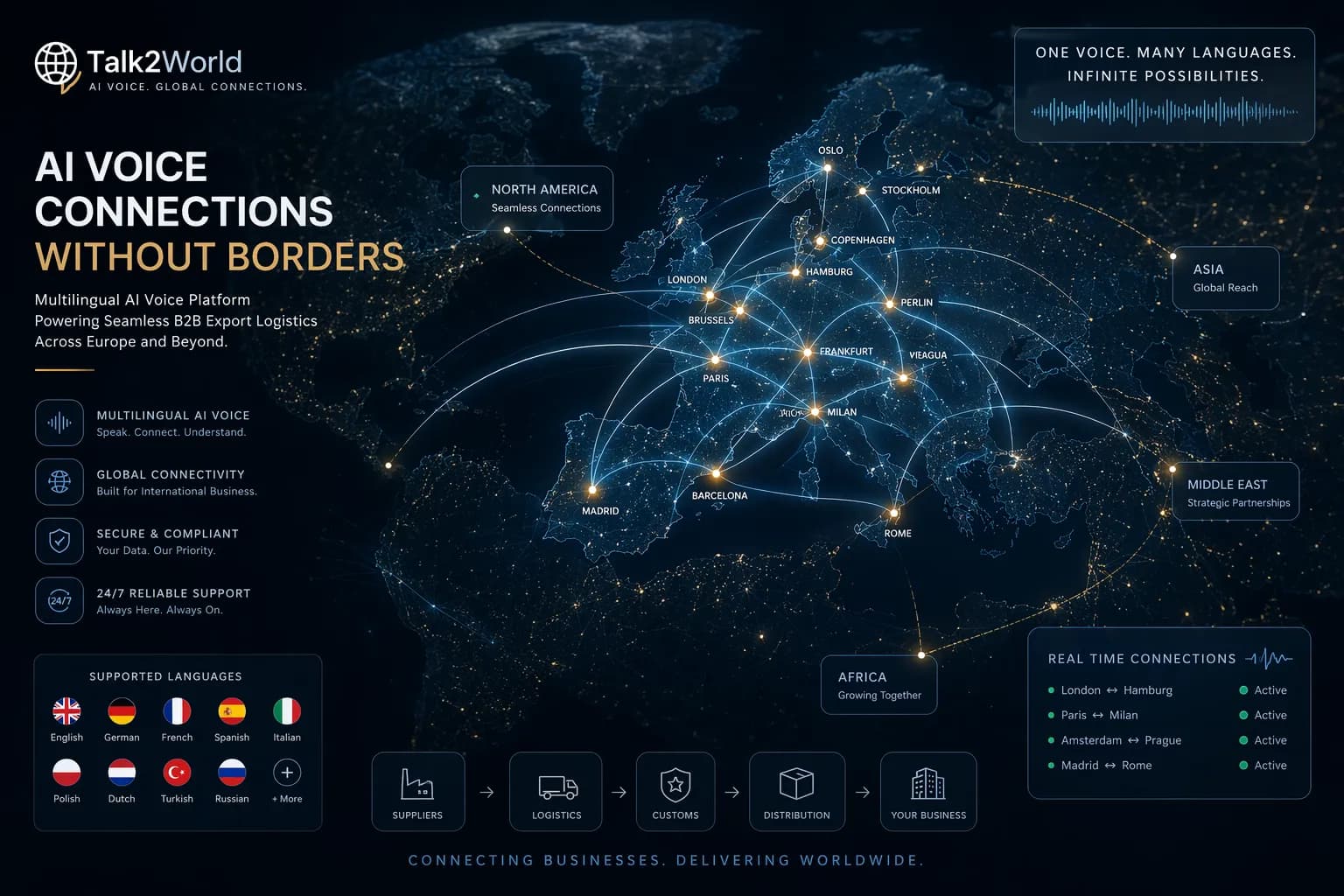
Customers call in various languages: Lithuanian, English, German, Polish, Latvian. They call at different times, often late at night or early in the morning. The owner or administrator of a small hotel cannot physically answer every call and speak fluently in all these languages. If you don't answer, a potential guest simply calls another nearby guesthouse. You lose a booking without even realizing it.
This is precisely the problem that POSKAI AI solves. We have created a system that allows even the smallest guesthouses to provide professional, multilingual customer service 24 hours a day, 7 days a week.
Real-world scenario: A German tourist calls at 11 PM
Imagine a standard situation. A German family is traveling through Lithuania towards the coast. It's 11:00 PM, they're looking for accommodation online and find your guesthouse. They call the provided phone number.
What usually happens? No one answers because working hours are over. Or a tired owner answers, who struggles with German, leading to a misunderstanding. Tourists hang up and look for another option.
What happens with POSKAI? The system automatically recognizes that the incoming call is in German. The POSKAI voice engine instantly switches and greets the customer in natural, fluent German. The POSKAI AI assistant asks for the desired room dates, checks your hotel's occupancy system, confirms that a family room is available for 80 euros, and books it. The guest receives an SMS confirmation, and your system is updated. In the morning, you simply see a new, paid reservation.
This single call has just recouped part of the system's monthly cost. POSKAI speaks English, German, Polish, Latvian, and other languages with the same natural fluency as Lithuanian. Hiring someone who speaks five languages and works nights would cost you thousands. POSKAI does this automatically.
Providing local information and coordinating check-ins
Successful tourism automation is not just about taking bookings. It's about continuous work with existing guests. Hotel administrators answer the same routine questions dozens of times every day.
- „When can we check in?“
- „Where can I find the nearest good restaurant for dinner?“
- „What's the Wi-Fi password?“
- „How do we find the entrance to your parking lot?“
These calls take up a lot of time and prevent staff from focusing on quality in-person service. The POSKAI platform can be fully trained using your hotel's information. When a guest calls to ask about the best place to eat, the POSKAI AI assistant suggests your recommended local restaurants. When a guest asks if they can arrive later, the assistant explains where to find the key box and provides the PIN code.
Small guesthouses suddenly become modern, fully functional businesses that match the speed and quality of international hotel chains. All without additional staff and the headache of managing multiple employees.
Why do people still call instead of booking online?
A common question: „But everyone books via Booking.com or our website, why do we need a voice assistant?“
Reality shows otherwise. While online bookings make up a large part, specific or higher-value customers always want to talk. For example, older travelers, individuals looking for venues for private celebrations, or business clients wanting to clarify details regarding invoices and accommodation for larger groups. When your website says "book online," a large portion of this audience is simply turned away.
Accessibility is a critical success factor. A person driving a car cannot browse the internet. They use hands-free equipment and simply call. The POSKAI AI phone assistant ensures that no such call is missed, whether it's peak hour or the middle of the night.
AI vs Human vs Answering Machine
Let's compare how different solutions handle a late-night foreign tourist call.
| Feature | Traditional Answering Machine | Night Administrator | POSKAI AI Assistant |
|---|---|---|---|
| Monthly Cost | Cheap (but useless) | €1500 - €2500+ (with taxes) | from €500/month |
| Multilingualism | ❌ Only recorded text | ⚠️ Max 2-3 languages | ✅ Naturally speaks all popular languages |
| 24/7 Call Handling | ✅ Receives, but doesn't answer questions | ✅ Yes, if not tired or busy | ✅ Yes, handles 500+ calls simultaneously |
| Booking Confirmation | ❌ Impossible | ✅ Yes | ✅ Instantly integrated with calendar |
| Data Security (GDPR) | Minimal collection | Human error, information leakage | ✅ EU residency, full end-to-end encryption |
Pricing: How much does an AI hotel assistant cost?
Business owners often think that such advanced technology costs tens of thousands of euros. Traditional IT companies might indeed ask for such sums for developing a one-off "custom" solution, after which they would leave you with maintenance issues, unsupported software, and cybersecurity vulnerabilities.
POSKAI operates differently. We do not offer to build an expensive and short-lived toy. We provide a fully managed platform that is constantly updated, professionally maintained, and adapted to your needs. Your investment in POSKAI starts from €500/month. For this amount, you get an employee who never gets sick, never takes holidays, speaks foreign languages perfectly, and works without days off.
Compare this to alternatives. The minimum salary for one employee (including social security and taxes) already exceeds €1500. And if you need someone who communicates fluently in German, Polish, or English – you compete with international corporations and offer €2500 or even €3000. POSKAI provides you with the same, and often a much more effective, result for a flexible, accessible budget for small and medium-sized businesses (SMBs).
While competing American market players might offer cheap text-to-speech robot integration, their Lithuanian sounds like a slowly read, robotic textbook. In contrast, POSKAI's direct audio technology ensures natural intonation, rapid response (less than 500 ms), and true conversational fluency. Your customers will feel like they are interacting with a highly helpful professional.
Data Security and GDPR Compliance
The most important issue when working with foreign and local clients is data security. The European Union's General Data Protection Regulation (GDPR) requires strict control over customers' personal data, including phone numbers, names, and booking details.
Unlike popular US-based platforms that send your customer data to servers abroad and leave you responsible for legal consequences, POSKAI is built to the strictest European security standards. All voice recordings, transcriptions, and customer information are processed and stored exclusively within the EU territory. The POSKAI platform uses advanced encryption (cryptography), so you are absolutely protected from data leaks and related multimillion-euro fines. Your and your customers' secrets remain safe.
Automation that returns freedom to the business owner
Owners of rural tourism homesteads and small hotels often work 16 hours a day. They are administrators, housekeepers, and marketing specialists. The POSKAI AI phone assistant doesn't replace your team; it gives you back time that you can dedicate to where a human touch is truly needed.
Instead of being tied to the phone and worrying about a missed call, you can maintain the premises, personally interact with arriving guests, and plan business development. While you sleep, POSKAI answers a German tourist's call, takes a booking, and generates revenue for you. This is an investment in peace of mind and guaranteed growth.