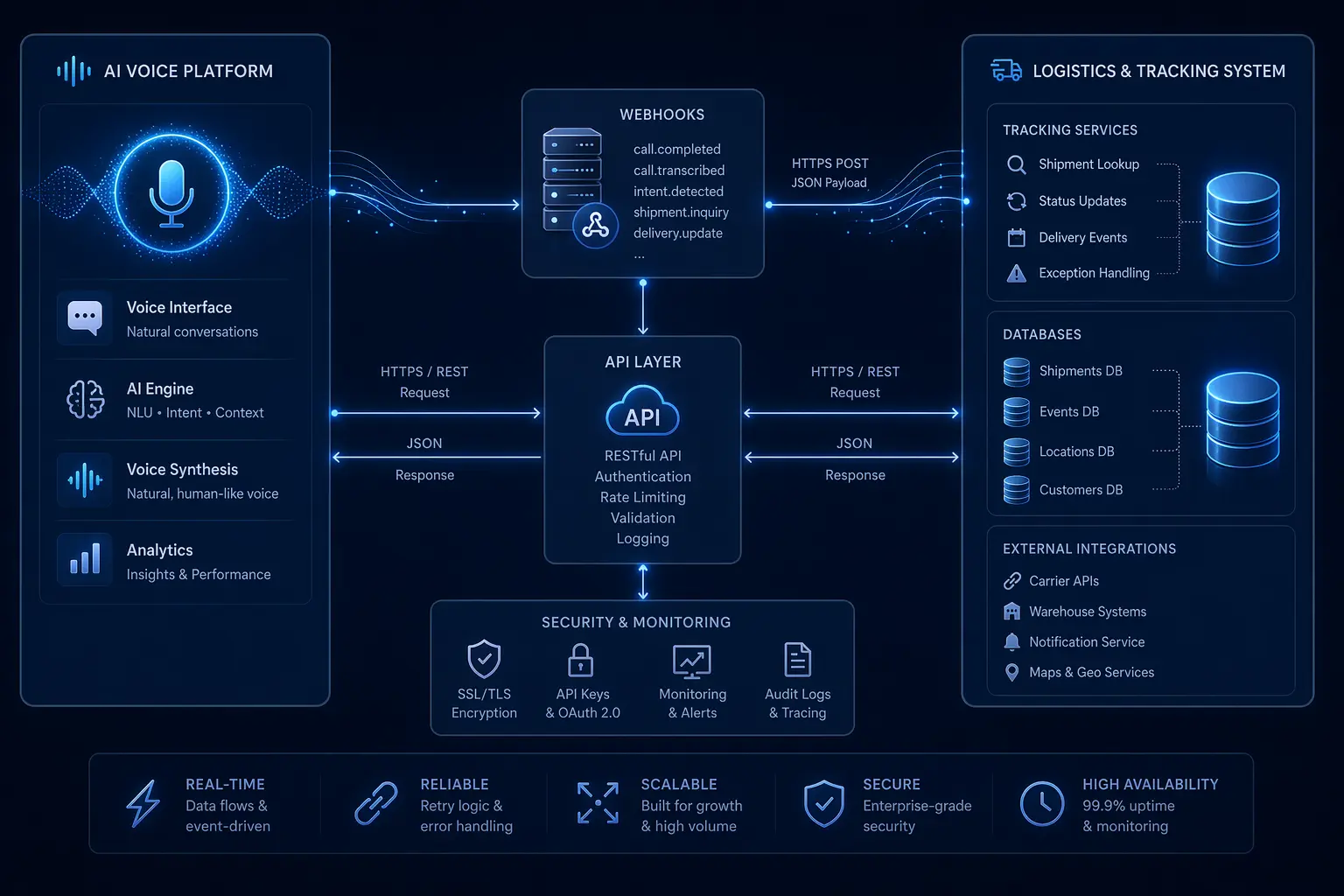
TL;DR: "Where is my order?" is the single largest inbound call driver for logistics and e-commerce. By connecting POSKAI AI to your TMS or e-commerce backend via webhooks, you can automate these routine inquiries with near-zero latency. This guide covers webhook architecture, JSON payloads, and security best practices for real-time shipment tracking.
The low-latency architecture problem
If you run an e-commerce business or a logistics operation, you already know that order-status calls consume massive amounts of support time. They are repetitive, structured, and entirely solved by a database lookup plus a carrier API call.
While a basic text chatbot handles this via simple API polls, voice AI requires a low-latency webhook architecture. A customer calling about a delayed package expects an instant, natural answer. If your backend takes 5 seconds to query a legacy Transportation Management System (TMS), the caller experiences dead air.
POSKAI's AI engine solves this by triggering real-time webhooks the moment an intent is recognized, retrieving data from your Order Management System (OMS), TMS, or Warehouse Management System (WMS) in milliseconds.
Core architecture flow
A standard order-tracking voice integration follows an event-driven flow:
- Call Started: The user calls the POSKAI support number.
- Intent Recognition: The caller says, "I want to check my order status." POSKAI's AI recognizes the intent to track a package.
- Data Collection: POSKAI naturally asks for the order number or tracking ID (and optionally validates the caller's phone number).
- Webhook Trigger: POSKAI fires a synchronous
POSTrequest to your backend endpoint containing the collected variables. - System Query: Your server queries the TMS/WMS (or a carrier system like AfterShip) and formats a structured response.
- Voice Synthesis: POSKAI's native voice technology reads the customized response back to the caller seamlessly.
Webhook payload examples
When POSKAI connects to your system, it sends a structured JSON payload containing the call context and extracted parameters.
Request payload (POSKAI to Your Server)
When the tracking tool is triggered, POSKAI sends the extracted data:
{
  "event": "tool.invoked",
  "call_id": "call_987654321xyz",
  "tool_name": "lookup_shipment_status",
  "parameters": {
    "order_number": "123456",
    "caller_phone": "+37060000000"
  },
  "metadata": {
    "timestamp": "2026-05-07T10:30:00Z"
  }
}
Response payload (Your Server to POSKAI)
Your server must respond quickly with the data POSKAI needs to generate a conversational reply.
{
  "status": "success",
  "data": {
    "status": "In Transit",
    "eta": "May 8th, 2026, by 5:00 PM",
    "current_location": "Kaunas Sorting Hub",
    "carrier": "DPD"
  },
  "ai_instructions": "Tell the user their package is in Kaunas and will arrive tomorrow by 5 PM. Ask if they want SMS updates."
}
By providing ai_instructions, you maintain strict control over how POSKAI delivers the information, preventing hallucinations and ensuring brand compliance.
Best practices: Security, Retries, and Idempotency
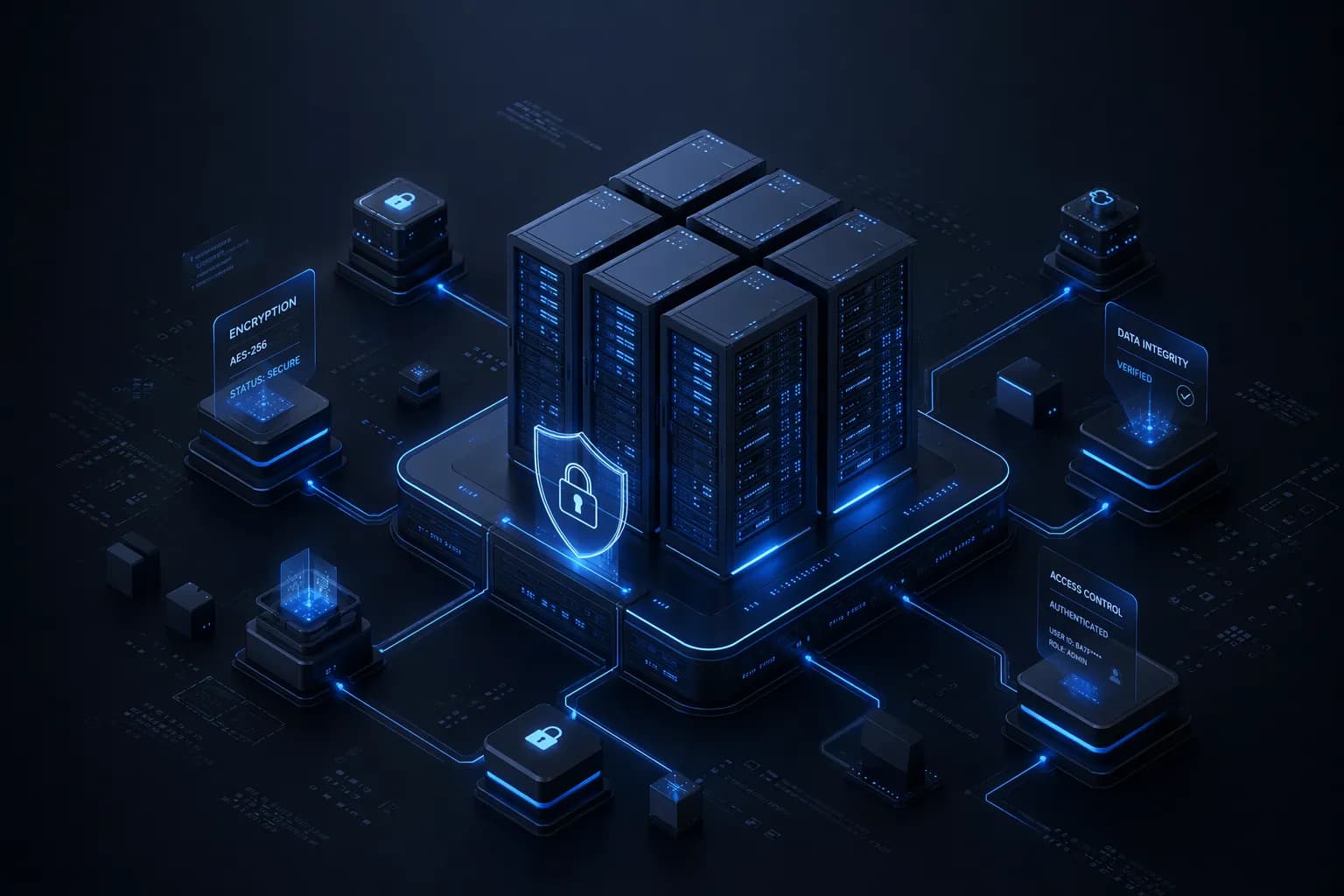
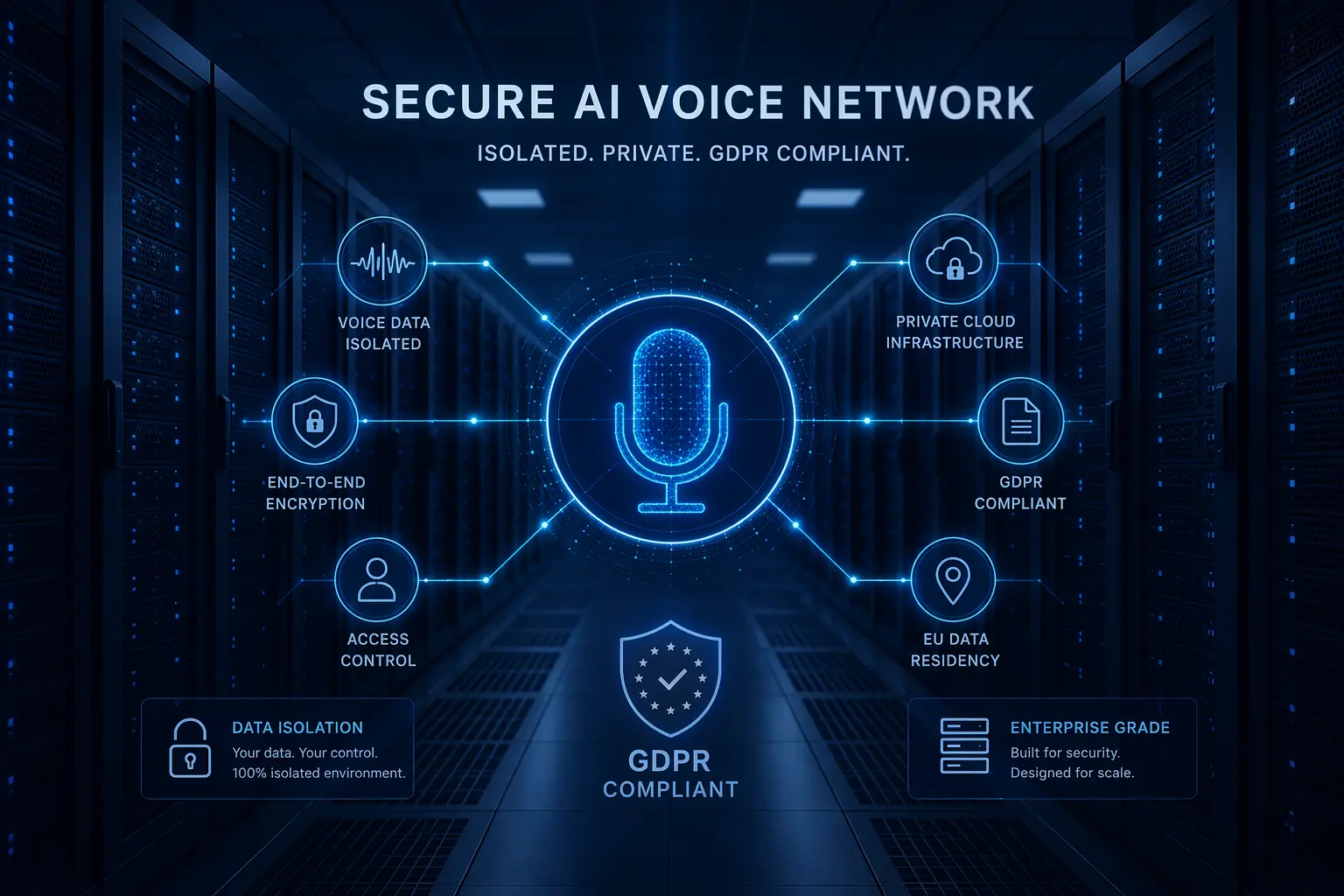
When integrating AI with your operational backend, security and stability are non-negotiable. Any vendor should document authentication, access control, audit logs, and data-residency boundaries before touching shipment data.
| Feature | Why it matters | POSKAI Implementation |
|---|---|---|
| Authentication | Prevents unauthorized queries to your TMS | Requires Bearer tokens or mTLS for all webhook endpoints. |
| Idempotency | Prevents double-processing if a network drop causes a retry | Unique call_id headers allow your server to deduplicate requests. |
| Timeouts | Prevents dead air if your legacy DB is slow | Strict timeouts with fallback conversational paths ("Let me look that up, one moment..."). |
| Data Residency | GDPR compliance for EU operations | All processing stays within the EU. |
Use cases across the supply chain
1. E-commerce retail (OMS)
Customers call about split shipments, refunds, and delivery ETAs. Webhooks pull from platforms like Shopify or Magento, allowing POSKAI to say, "Your shoes arrive tomorrow, but the jacket is delayed until Friday."
2. Freight forwarding (TMS)
Drivers call from the cab to report delays or get reference numbers. POSKAI captures the location, delay reason, and revised ETA, firing a webhook that writes straight into your dispatch board.
3. Warehousing (WMS)
B2B clients call to check inventory availability or gate assignment. POSKAI queries the WMS and directs the truck driver to the correct dock without human intervention. For a breakdown of the financial impact, see our ROI logistics research.