TL;DR: Many US-based voice AI platforms claim GDPR compliance but remain legally bound by the US CLOUD Act, exposing European customer data. POSKAI AI calls start from €500/month, providing strict EU data residency, per-client infrastructure isolation, and robust protection against prompt injection. Your call data never leaves the European Economic Area.
The GDPR vs. US CLOUD Act Paradox in Voice AI
Many Voice AI systems look secure on paper but fail in practice. The problem is not the base AI model—it is the geographic location where the live audio stream is processed.
In 2026, relying on platforms built on American infrastructure (like Vapi or Retell) creates a massive legal liability for European enterprises. The conflict between the EU’s General Data Protection Regulation (GDPR) and the US CLOUD Act is not just a theoretical nuance. The US CLOUD Act compels US-headquartered providers to hand over stored data when requested by authorities, regardless of where that data physically sits.
If your voice AI provider is a US company, even if they claim to have "European servers," every byte of your customer calls could potentially fall under foreign jurisdiction.
Prompt Injection and Customer Data Leakage
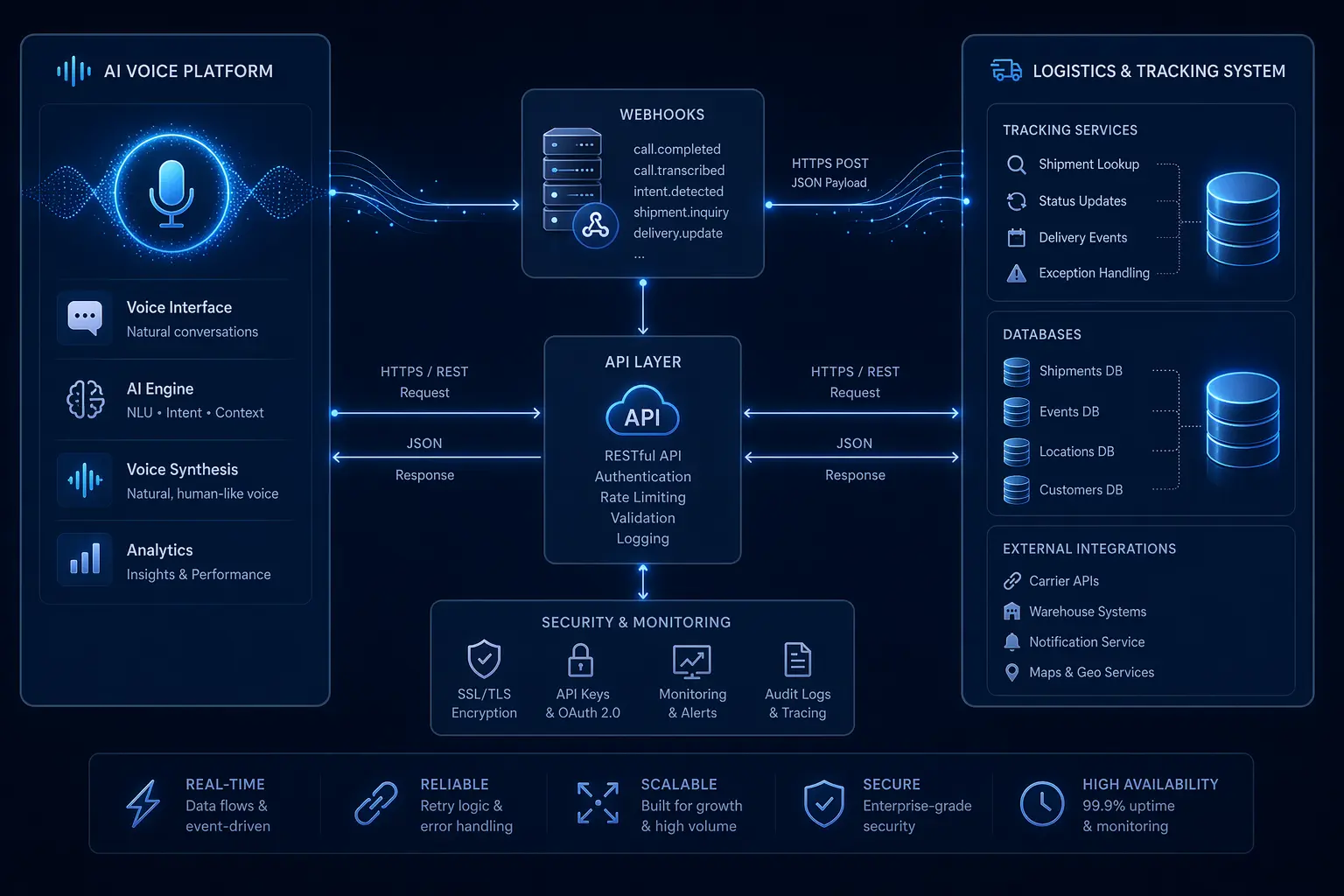
Beyond jurisdiction, there is the threat of indirect prompt injections. As Voice AI systems integrate directly into enterprise CRMs and databases, they bridge internal and external data sources.
A critical vulnerability in generic platforms is that malicious actors can speak specific command sequences during a live call to "jailbreak" the AI. This can force a poorly secured system to extract and leak confidential system prompts or, worse, other clients' data.
POSKAI approaches this differently. By utilizing the proprietary POSKAI AI engine with hardened guardrails and isolated tenant environments, we ensure that a malicious input from one call cannot access or manipulate the core system or parallel databases.
EU Data Residency and Per-Client Isolation
For regulated industries—such as banking, healthcare, and logistics—data must be isolated. Multi-tenant SaaS platforms where everyone shares the same processing pipeline are a compliance nightmare.
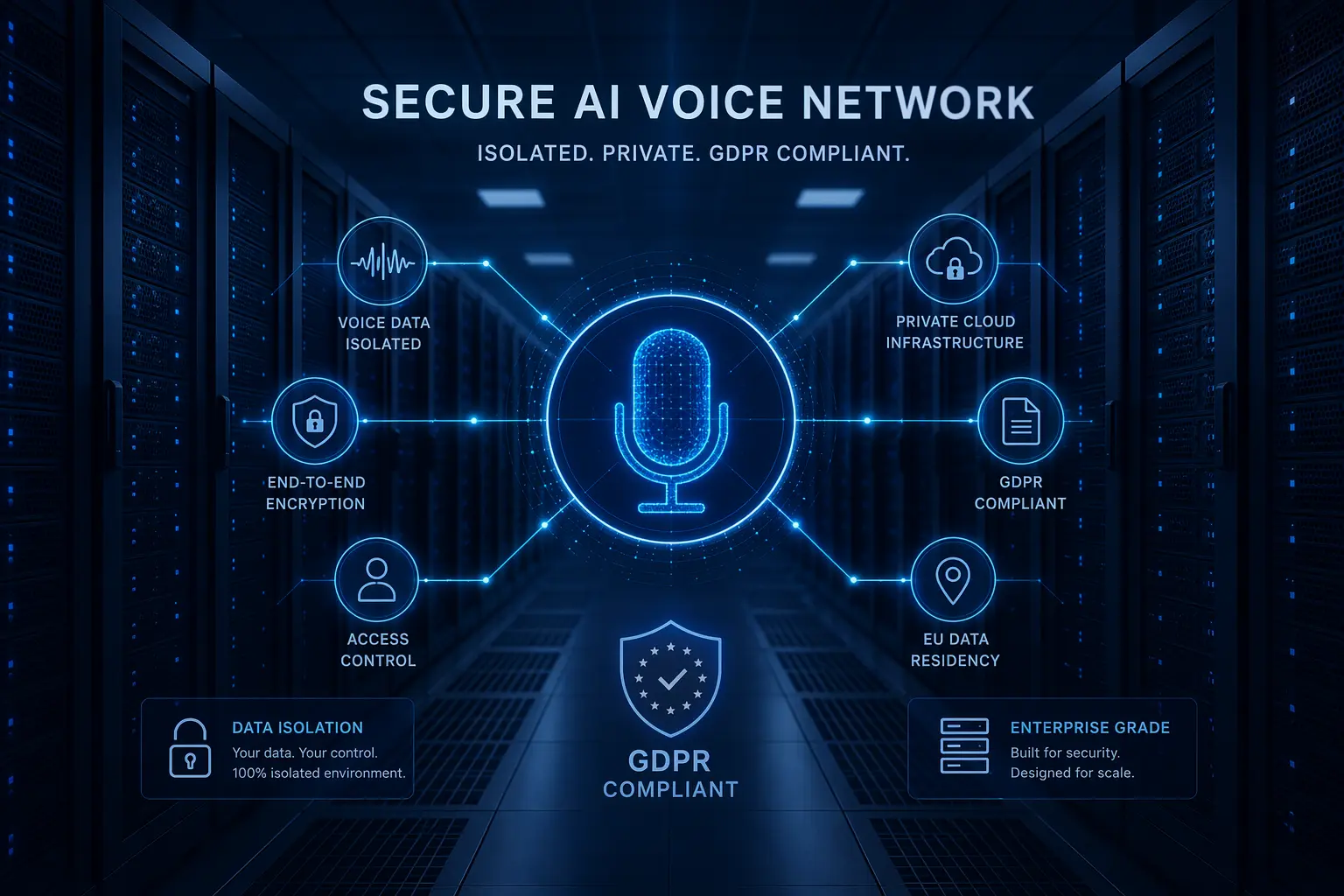
POSKAI guarantees data sovereignty through per-client isolation. This means your conversational processing, call logs, and business logic run in a dedicated, heavily encrypted environment.
This architecture allows businesses to scale securely:
- No shared context: Your AI assistant never learns from or bleeds into another company's data.
- Strict EU Boundaries: The entire POSKAI direct audio technology operates exclusively within the European Economic Area (EEA).
- Hybrid Readiness: We integrate seamlessly with your existing on-premise or private cloud telephony setups.
See how POSKAI compares with AInora.
The POSKAI Architecture Checklist for Data Sovereignty
When evaluating a voice AI platform, your IT and legal teams should demand the following:
- [x] Geographic Exclusivity: Does the audio processing stay entirely within the EU?
- [x] Legal Protection: Is the parent company immune to the US CLOUD Act?
- [x] Tenant Isolation: Are your transcripts and AI memory logically separated from other clients?
- [x] Injection Defense: Does the platform sanitize live audio inputs to prevent prompt injection?
- [x] Predictable Costs: Does it avoid per-minute billing traps?
POSKAI checks every box. For logistics companies, financial institutions, and enterprise customer service centers, this level of security is no longer a luxury—it is a legal requirement.
Read our AI funding guide to understand how secure automation can be subsidized, or explore our Logistics transport use case to see our technology in action.
The questions your legal and IT teams should ask
A serious voice AI procurement process should start with documentation, not demos. Ask every vendor for the data flow diagram, subprocessors, hosting regions, retention policy, encryption model, access logs, incident response process, and deletion workflow. If the vendor cannot answer before the contract, your company is accepting risk without being able to measure it.
For customer calls, the most important detail is where live audio, transcripts, summaries, and CRM actions are processed. Some providers keep the dashboard in Europe but still send audio streams, transcriptions, or language-model requests to a separate global provider. That distinction matters. A compliant architecture must describe every hop of the call, not only the final database location.
Practical deployment models
There are three common ways to deploy secure voice AI. The first is fully hosted EU infrastructure, where the provider operates the environment inside European regions. The second is a private-cloud or dedicated-tenant model, where each customer receives separated processing, storage, and configuration. The third is hybrid integration, where POSKAI connects to a customer's existing CRM, ERP, or telephony stack while keeping voice automation isolated from other clients.
Most Lithuanian companies do not need a heavy on-premise installation from day one. They need clear EU residency, contractual controls, secure integrations, and a provider willing to adapt the deployment to regulated workflows. POSKAI's per-client isolation model is built for that middle ground: enterprise-grade separation without forcing every customer to run an AI infrastructure team internally.